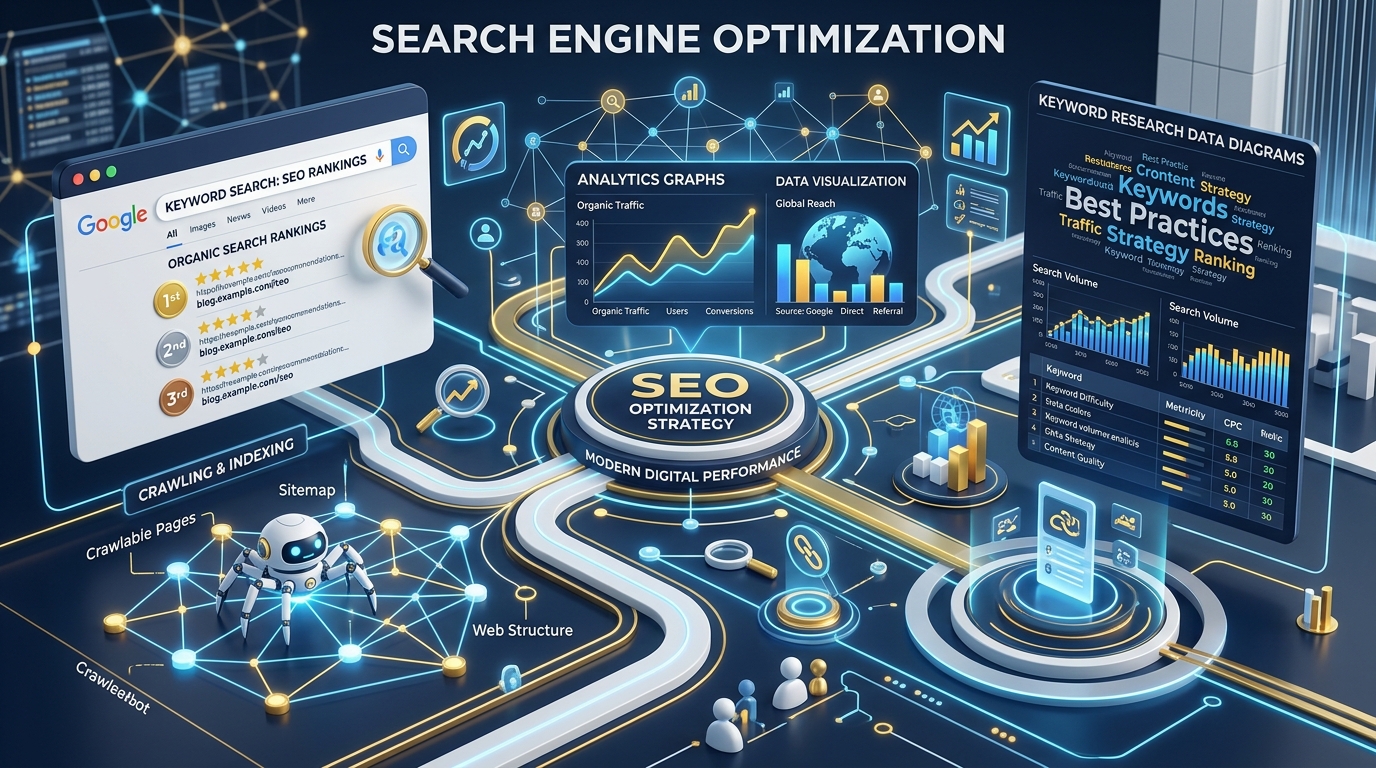
Search Engine Optimization (SEO) is the systematic process of improving website crawlability, content relevance, and link authority to secure top unpaid positions on a Search Engine Results Page (SERP). It works by aligning your web pages with the mathematical algorithms and search intent criteria established by search engines like Google, Bing, and Yahoo.
The main benefits of Search Engine Optimization (SEO) center on generating predictable, high-intent organic search traffic that converts into revenue without continuous ad spend. Websites that rank on the first page of Google capture 68.7 percent of all clicks, lowering customer acquisition cost (CAC) and building enduring market credibility.
The primary uses and applications of Search Engine Optimization (SEO) span local customer acquisition, nationwide ecommerce sales, B2B lead generation, and global brand visibility. Organizations deploy search optimization to capture users at each step of their buying cycle, from informational problem discovery to commercial transactions.
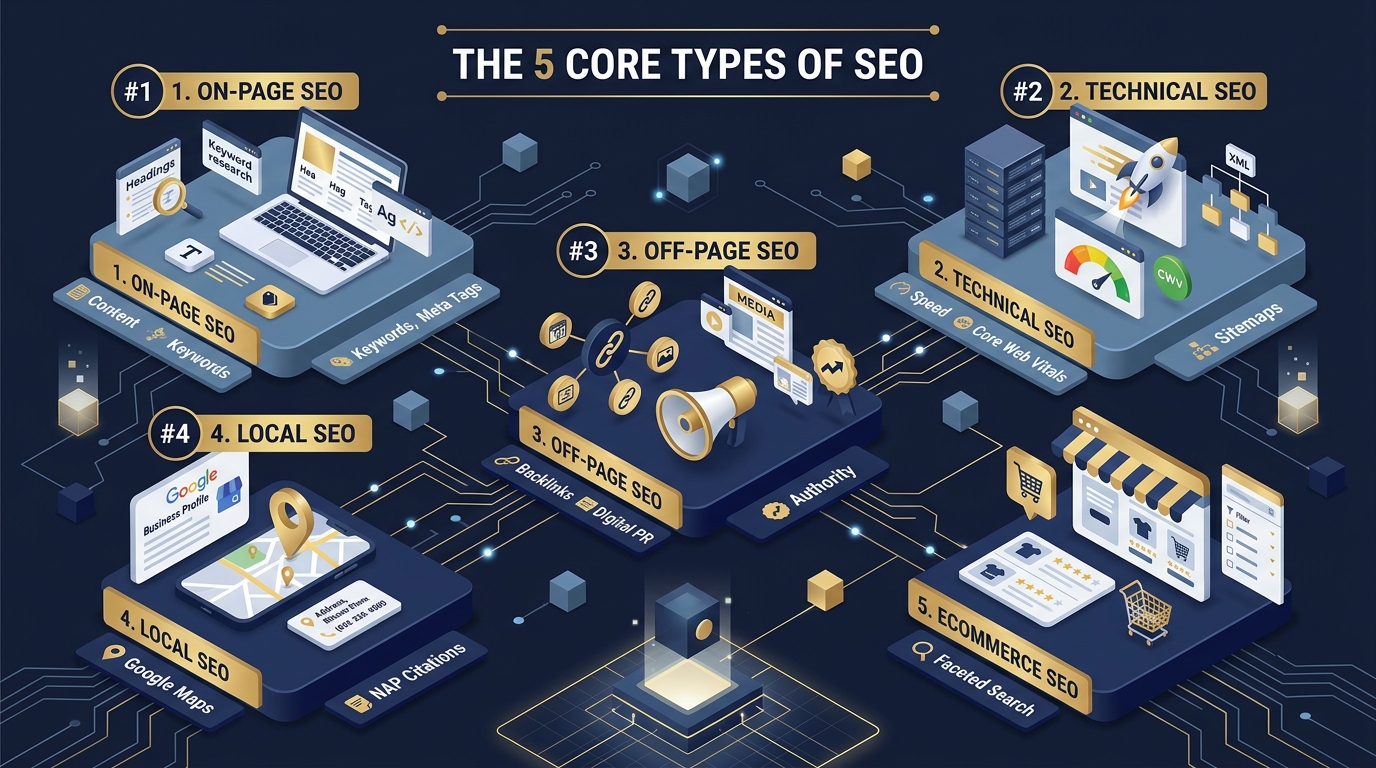
The main parts and components of Search Engine Optimization (SEO) consist of On-Page SEO, Technical SEO, Off-Page SEO, Local SEO, and Ecommerce SEO. Executing these five components in coordination creates a high-performing digital platform that search crawlers parse effortlessly and target audiences trust. High-growth brands partner with Professional SEO Services to build custom search strategies that scale customer acquisition and revenue.
What Is Search Engine Optimization and How Does It Work?
Search Engine Optimization (SEO) is the practice of optimizing digital web properties to increase organic search engine visibility, keyword rankings, and website traffic. It works by satisfying search engine ranking factors across technical performance, semantic topical depth, and verified external authority.
Search engines evaluate millions of pages per second. When a user submits a search query, algorithmic systems score every relevant document in the index and present the most useful answers in ranked order.
How Search Engines Work
Search engines work through 3 core sequential phases: Crawling, Indexing, and Ranking.
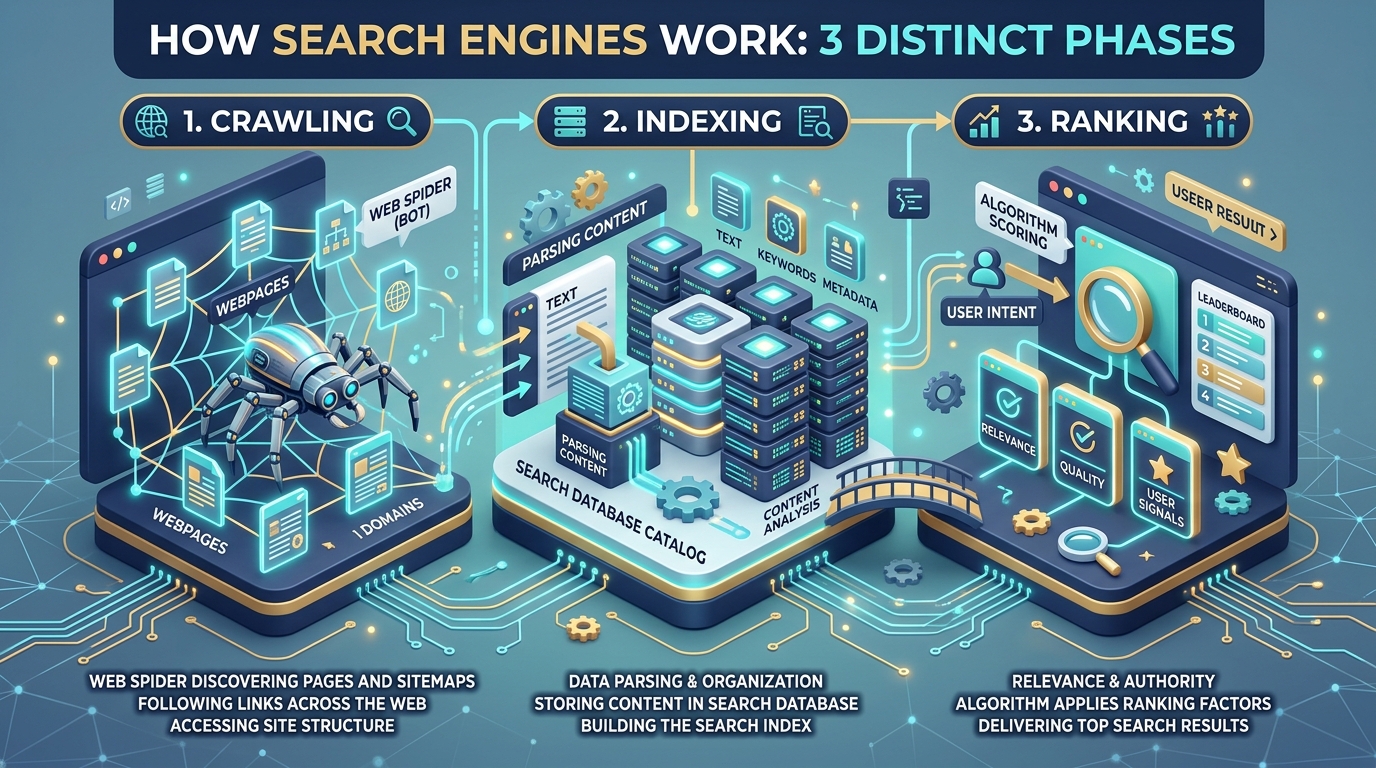
- Crawling: Automated bot programs called spiders or web crawlers (such as Googlebot and Bingbot) scan the internet by following hyperlinks from known pages to newly published or updated URLs. Spiders download web page files, including HTML code, stylesheets, JavaScript files, and image assets.
- Indexing: Search engines process and parse the downloaded text content, structural data tags, and media assets. The parsed data is categorized and cataloged in a massive distributed database known as the search index. Uncrawlable or broken URLs are discarded from indexation.
- Ranking: An algorithmic scoring framework calculates the exact relevance, authority, and usability of indexed pages against the user's specific query. The system returns the highest-scoring URLs on the Search Engine Results Page (SERP).
How SEO Works
SEO works by adjusting on-site code, content structure, and external reputation signals to match search engine ranking criteria.
Search optimization targets 4 operational layers across your website:
- Keyword Research: Identifying high-volume search queries and search intent variations using SEO tools and software such as Moz, Ahrefs, and SEMrush.
- Content Optimization: Producing accurate editorial copy that resolves the user query thoroughly while integrating semantic Latent Semantic Indexing (LSI) terms and descriptive Meta Tags.
- Technical Architecture: Accelerating page loading speed, repairing broken HTTP status codes, and establishing clean XML Sitemap and Robots.txt directives.
- Link Building: Earning authoritative Backlink references from trusted third-party websites to elevate Domain Authority (DA) and PageRank scores.
What Is the Purpose of SEO?
The primary purpose of SEO is to connect your business with active searchers seeking your exact products, services, or knowledge.
Unlike broadcast advertising channels that interrupt consumers, search optimization positions your website directly in front of prospects when their commercial intent is at its highest point. SEO aligns digital content with user demand to generate sustainable inbound leads and long-term customer relationships.
Why Is SEO Important?
SEO is important because organic search generates 53.3 percent of all global website traffic, outperforming paid search, organic social media, and display advertising combined.
There are 5 critical reasons search optimization is essential for commercial growth:
- Capture High-Intent Buyers: Connect with users actively searching for commercial solutions right now.
- Build Brand Credibility: Position your company as an established industry authority on top Google search rankings.
- Compound Marketing ROI: Generate recurring organic traffic indefinitely without paying fees per click.
- Improve User Experience: Accelerate page load times, mobile rendering responsiveness, and logical navigation hierarchies.
- Defend Market Share: Prevent competing brands from capturing prime SERP positions for your core commercial keywords.
What Are the Different Types of SEO?
There are 5 distinct types of SEO: On-Page SEO, Technical SEO, Off-Page SEO, Local SEO, and Ecommerce SEO. Each type addresses a specific dimension of search engine discovery, user experience, or authority validation.
On-Page SEO
On-Page SEO is the practice of optimizing content elements and HTML source code directly within your website's pages.
On-page optimization techniques focus on search intent satisfaction, keyword placement, and semantic clarity. Core on-page tactics include:
- Title Tags and Meta Descriptions: Writing compelling, keyword-focused meta tags that improve Click-Through Rate (CTR) on search result pages.
- Heading Hierarchy: Organizing content logically with clean H1, H2, and H3 tags to communicate structural context to web crawlers.
- SEO Content Writing: Crafting comprehensive editorial articles that answer user queries thoroughly, applying insights from our Content strategy Topical Authority framework.
- Image Optimization: Adding descriptive Alt Text, optimizing file dimensions, and serving next-gen WebP formats.
- Internal Linking: Connecting contextually related topic pages together to distribute PageRank across the domain.
Technical SEO
Technical SEO is the practice of refining server configurations, site speed, and indexing mechanics so search spiders crawl and index web pages without friction.
Technical optimizations ensure search engines discover, parse, and render your digital assets efficiently. Core technical SEO checklist requirements include:
- Core Web Vitals Optimization: Passing thresholds for Largest Contentful Paint (LCP < 2.5s), Interaction to Next Paint (INP < 200ms), and Cumulative Layout Shift (CLS < 0.1). Read our comprehensive Technical SEO Guide to diagnose crawl budgets and render queues.
- Robots.txt and XML Sitemap Management: Instructing search bots which subdirectories to crawl while submitting clean XML sitemap indices to Google Search Console (GSC).
- Canonical URL Configuration: Adding self-referential canonical tags to prevent duplicate content penalties across parameterized URL filters.
- Mobile-First Indexing: Ensuring responsive mobile viewport rendering, legible font sizing, and touch-friendly navigation elements.
- Structured Data Markup: Implementing Schema.org JSON-LD scripts to secure rich snippets and featured snippet optimization.
Off-Page SEO
Off-Page SEO is the execution of external optimization activities outside your website to build brand authority, trust, and link equity.
Search engines treat external links as endorsements of content quality. Off-page link building strategies include:
- Editorial Link Acquisition: Earning high-quality Backlink placements from authoritative industry publications through digital PR and original research studies.
- Brand Mentions and Citations: Generating unlinked brand mentions on reputable media outlets that reinforce topical trust.
- Backlink Quality Assessment: Monitoring inbound links via Ahrefs and SEMrush to disavow toxic link spam networks.
- White Hat SEO Partnerships: Collaborating with industry organizations and educational institutions on joint webinars and white papers.
Local SEO
Local SEO is the specialized process of optimizing physical storefronts and service-area businesses to capture geographic search queries in Google Maps and local map packs.
Local SEO for businesses relies on 4 core regional signals:
- Google Business Profile (GBP) Optimization: Claiming and verifying your GBP listing with accurate business categories, opening hours, high-resolution photos, and regular updates.
- NAP Consistency: Synchronizing your Name, Address, and Phone number identically across all online directories (such as Yelp, Yell, and Thomson Local).
- Customer Review Velocity: Gathering authentic 5-star customer reviews and responding to feedback actively to boost local relevance.
- Geotargeted Landing Pages: Building dedicated location pages optimized for city-level search terms.
Ecommerce SEO
Ecommerce SEO is the tactical optimization of online retail stores, category structures, and product listing pages to capture transactional search traffic.
Online merchants apply ecommerce SEO to convert high-intent shoppers into paying customers. Key ecommerce optimization requirements include:
- Faceted Navigation Control: Preventing crawl budget waste on multi-attribute filters by canonicalizing size, color, and price variants.
- Product Page SEO: Writing original product descriptions, integrating customer review schema, and adding price and stock availability structured data.
- Category Hierarchy Architecture: Creating logical parent-to-child silo structures that direct link authority into top-selling inventory pages.
- Out-of-Stock Management: Implementing 301 redirects or 410 status codes for discontinued items while maintaining seasonal category pages.
What Is Organic SEO?
Organic SEO is the practice of earning unpaid search rankings in the standard algorithmically generated listings of search engines.
Organic SEO differs from local map packs and paid advertising modules because it ranks web documents based purely on algorithmic merit, content depth, technical health, and external link equity. Organic search optimization generates sustainable traffic volume that persists long after initial publication, creating a compounding digital asset for your organization.
What Is Basic SEO?
Basic SEO is the foundational tier of search engine optimization focused on essential on-page tags, basic site hygiene, and search console verification.
There are 6 foundational steps in basic search engine optimization:
- Register Search Console Tools: Connect your domain to Google Search Console (GSC) and Bing Webmaster Tools.
- Install Web Analytics: Deploy Google Analytics (GA4) tracking to measure user sessions, pageviews, and goal conversions.
- Set Up an SEO Plugin: Configure WordPress plugins like Yoast SEO or Rank Math, if your site operates on CMS software.
- Submit an XML Sitemap: Generate and submit an error-free sitemap to facilitate efficient URL discovery.
- Optimize Page Title Tags: Add unique, descriptive title tags containing primary keywords under 60 characters.
- Write Meta Descriptions: Include action-oriented meta summaries under 155 characters on all primary pages.
What Is Advanced SEO?
Advanced SEO is the sophisticated execution of data-driven search strategies, including semantic entity mapping, log file analysis, JavaScript rendering optimization, and digital PR link acquisition.
Advanced SEO practitioners move beyond standard keyword targeting to engineer market-dominating search footprints. Key advanced techniques include:
- Log File Analysis: Inspecting raw server access logs to calculate bot crawl frequency, identify wasted crawl bandwidth, and detect orphan URLs.
- Entity and Knowledge Graph Optimization: Structuring content around defined semantic entities recognized by Google's Knowledge Graph rather than isolated string keywords.
- International SEO Hreflang Tags: Implementing exact
hreflangannotations to serve localized content across multilingual and multi-regional domains. - Programmatic SEO Architectures: Building scalable database-driven page templates that target thousands of long-tail search permutations systematically.
- Core Web Vitals Advanced Tuning: Utilizing modern web APIs (such as
scheduler.yield()) to eliminate Interaction to Next Paint (INP) bottlenecks.
What Is SEO and How Do You Use It?
SEO is a continuous business discipline that you use by following a structured 5-step operational cycle: Audit, Research, Optimize, Build Authority, and Measure.
To use SEO to grow commercial business revenue, execute this step-by-step framework:
- Step 1: Perform a Comprehensive SEO Audit: Evaluate site architecture, indexation status, mobile responsiveness, and backlink health to identify baseline performance blockers.
- Step 2: Conduct User Intent Keyword Research: Discover high-opportunity keywords mapped to commercial, transactional, and informational search intent using Ahrefs and SEMrush.
- Step 3: Implement On-Page and Technical Optimizations: Update meta tags, restructure headings, author comprehensive copy, and resolve site speed bottlenecks.
- Step 4: Execute Authority Building Campaigns: Distribute proprietary data reports and digital PR stories to earn top-tier editorial backlinks.
- Step 5: Track Analytics and Iterate: Monitor rankings, organic traffic, and conversion events in Google Analytics (GA4) and Google Search Console (GSC) weekly to refine underperforming pages.
What Is an SEO Example?
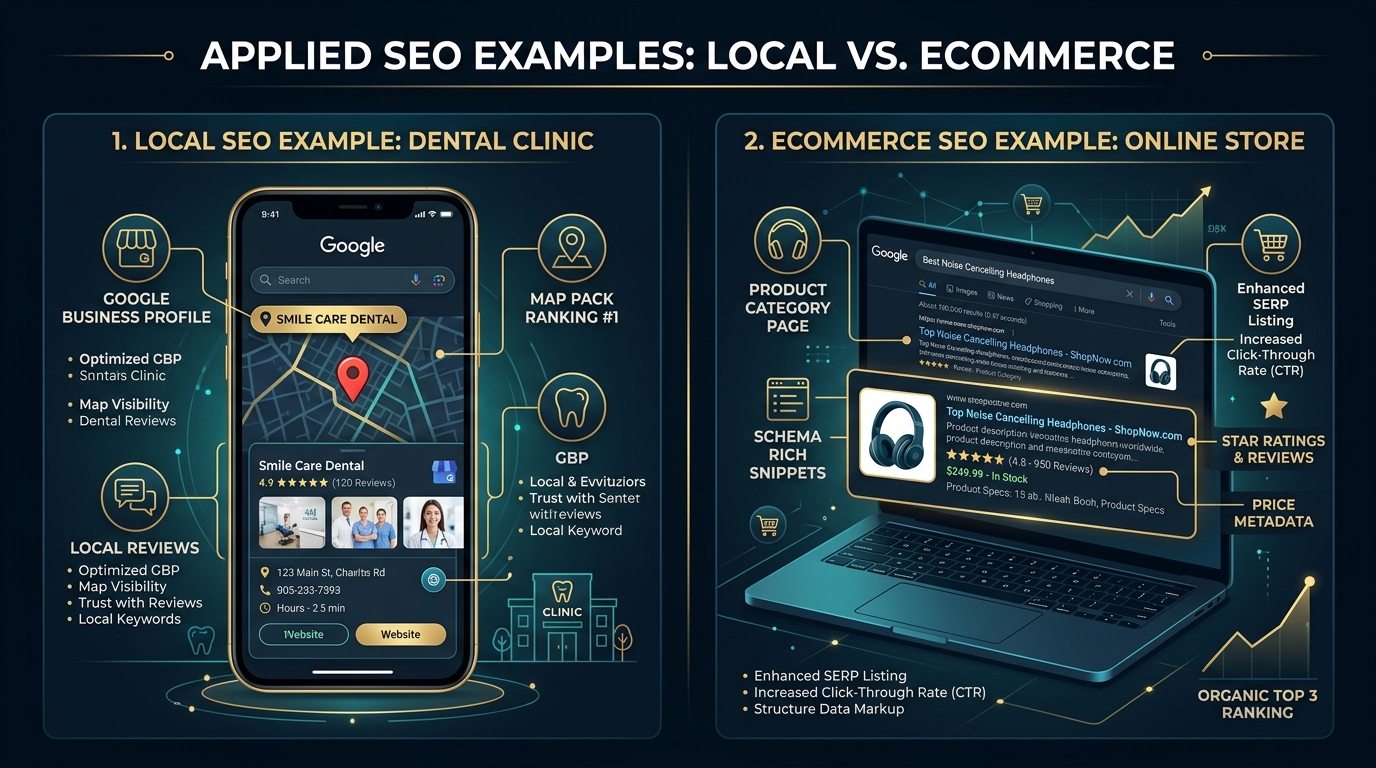
An SEO example is a concrete real-world implementation where search engine optimization techniques transform low digital visibility into top search rankings, qualified traffic, and revenue.
Example of SEO for a Local Business
Consider a local dental practice in Birmingham ranking on page 4 of Google for the high-intent query "emergency dentist Birmingham":
- Problem: The clinic had an unverified Google Business Profile, inconsistent directory citations, and a slow website loading in 4.8 seconds.
- Optimization Actions: The team claimed and optimized the Google Business Profile, unified NAP citations across 40 UK directories, compressed hero images to reduce load time to 1.4 seconds, and authored a localized service landing page targeting "emergency dental care Birmingham".
- Results: Within 12 weeks, the practice moved into position #1 on the local Google Map Pack and position #2 in organic SERPs, generating a 210% increase in patient appointment phone calls.
Example of SEO for an Ecommerce Website
Consider an online store retailing sustainable leather footwear competing against major national department stores:
- Problem: The retailer suffered from duplicate content across color filter URLs, missing product schema, and thin 50-word product descriptions.
- Optimization Actions: The store canonicalized faceted filter variants, authored 400-word comprehensive buying guides on category pages, added Product and AggregateRating JSON-LD schema, and earned 18 editorial backlinks from sustainable lifestyle blogs.
- Results: Organic search traffic grew by 340% in 6 months, and the main category page ranked in top 3 positions for 45 transactional commercial keywords, delivering £185,000 in additional organic revenue.
What Does SEO Mean in 2026?
In 2026, SEO means optimizing for multi-modal search engines, Generative Engine Optimization (GEO), AI Search Overviews, and strict user-experience satisfaction thresholds.
The search landscape has evolved beyond basic keyword density into a sophisticated ecosystem governed by artificial intelligence and Large Language Models (LLMs). Key shifts defining search optimization in 2026 include:
- Generative AI Synthesis and Citations: Google Search Generative Experience (SGE) and AI Overviews summarize answers directly on SERPs. SEO now requires structuring content so AI algorithms extract and cite your brand as the primary source entity.
- Zero-Click Search Strategies: With featured snippets and AI answers fulfilling brief queries immediately, SEO prioritizes high-intent commercial keywords and proprietary in-depth research that requires full page visits.
- First-Hand Experience (E-E-A-T): Google heavily rewards Experience, Expertise, Authoritativeness, and Trustworthiness (E-E-A-T). Content authored by verified industry practitioners outranks generic automated copy.
- Multi-Modal Search Discovery: Users search through voice search, Google Lens visual queries, and video embeds, making descriptive image alt text and structured video schema mandatory.
What Are the Benefits of SEO?
There are 7 major business benefits of Search Engine Optimization:
- Compounds Long-Term Revenue: Organic search traffic continues to arrive without ongoing media ad expenditure.
- Lowers Customer Acquisition Costs: Generating organic leads reduces reliance on escalating pay-per-click advertising bids.
- Enhances Website User Experience: Faster loading speeds, clean navigation hierarchies, and responsive mobile rendering satisfy both search crawlers and human visitors.
- Builds Trust and Market Authority: Ranking on the first page of Google establishes immediate brand credibility among prospective buyers.
- Dominates Full-Funnel Touchpoints: Captures prospects at informational, commercial investigation, and transactional purchase stages.
- Generates Local Store Foot Traffic: Local SEO drives local foot traffic and direct phone inquiries to physical business locations.
- Provides Rich Business Intelligence: Keyword research data reveals exact customer pain points, search habits, and market trends.
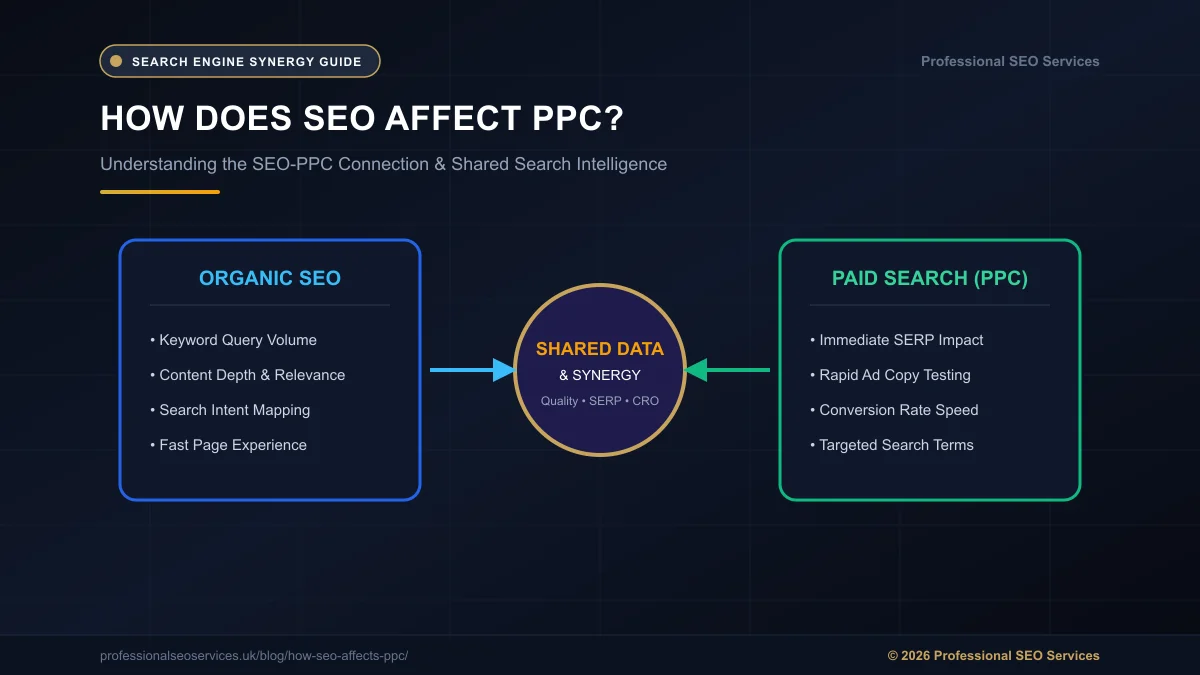
What Is the Difference Between SEO and Paid Search?
The difference between SEO and Paid Search (PPC/SEM) lies in traffic acquisition cost, placement mechanics, and long-term sustainability.
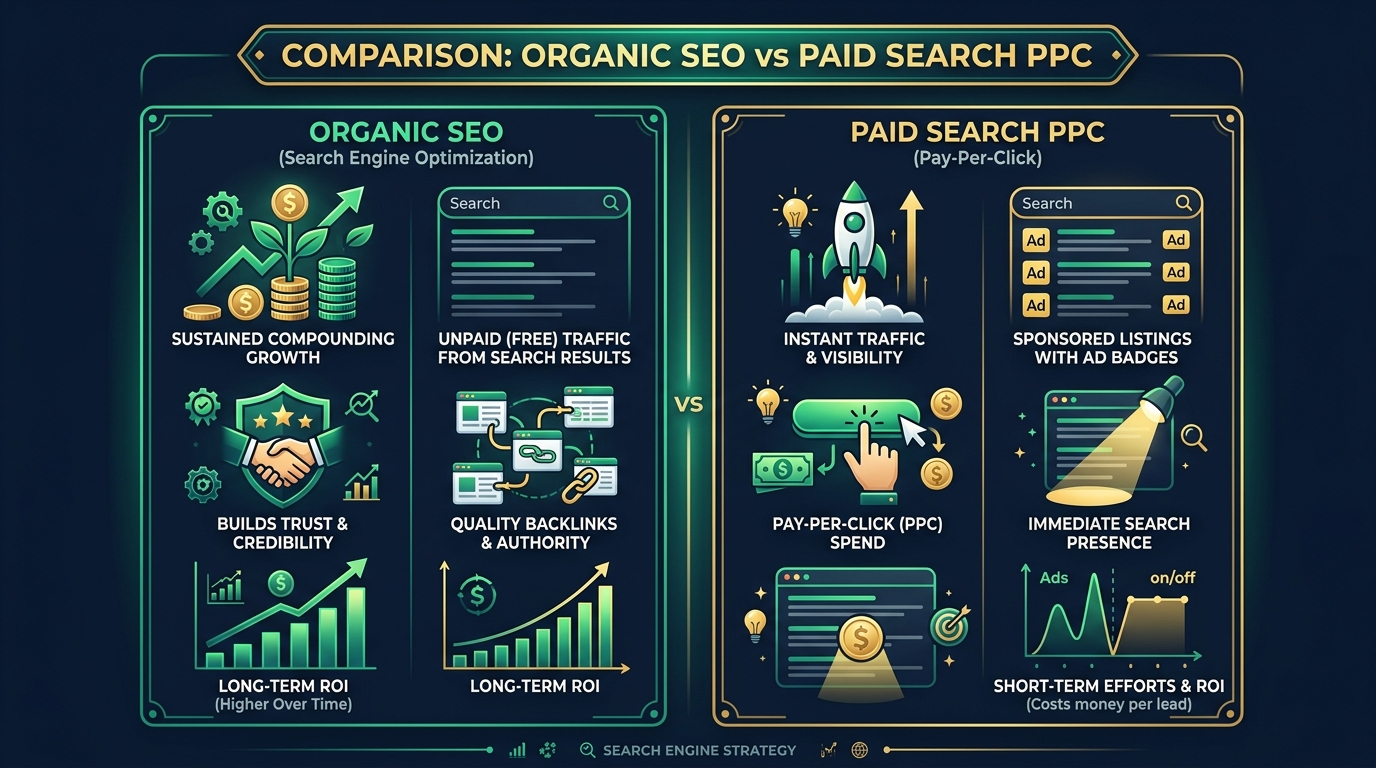
While Paid Search delivers instantaneous visibility by purchasing ad placements at the top of the SERP, traffic stops immediately when advertising budgets are depleted. In contrast, Search Engine Optimization (SEO) requires upfront engineering and editorial investment, but produces compounding, unpaid organic traffic that endures over years.
To understand how organic search and paid advertising reinforce each other in a coordinated strategy, learn how does SEO affect PPC campaigns by improving Quality Scores, reducing keyword waste, and dominating total SERP real estate.
How Long Does SEO Take to Work?
SEO typically takes between 3 to 6 months to generate measurable ranking improvements and noticeable organic traffic growth.
The exact timeline required for search engine optimization to deliver substantial commercial returns depends on 4 decisive factors:
- Domain Age and History: Established websites with existing backlink authority see results within 60 to 90 days, whereas brand new domains require 6 to 9 months to build initial search engine trust.
- Keyword Competition: High-volume commercial search terms dominated by enterprise brands take 9 to 12 months of sustained link building, while low-competition long-tail keywords can rank in 30 to 60 days.
- Technical Baseline Quality: Resolving severe crawl errors, broken redirects, or indexing blocks can trigger rapid ranking jumps within 2 to 4 weeks after Googlebot recrawls the updated site.
- Publishing and Link Building Velocity: Organizations that consistently publish high-depth editorial content and earn tier-one editorial links compound organic growth twice as fast as slow-moving competitors.
Common SEO Mistakes to Avoid
There are 6 common SEO mistakes that severely harm search visibility and organic revenue:
- Keyword Stuffing: Overloading sentences with unnatural keyword repetitions triggers algorithmic spam filters and damages content readability.
- Ignoring Technical Site Health: Neglecting Core Web Vitals, slow server response times, and broken links prevents search engines from indexing pages efficiently.
- Publishing Duplicate or Thin Content: Copying supplier product copy or producing low-depth 200-word articles leads to index exclusion.
- Purchasing Low-Quality Link Packages: Buying links from link farms or Private Blog Networks (PBNs) violates Google Webmaster Guidelines and risks manual penalties.
- Neglecting Mobile Responsiveness: Failing to optimize touch targets, font scaling, and viewport rendering suppresses rankings under Google's mobile-first indexing.
- Failing to Set Up Analytics Tracking: Running optimization campaigns without configured Google Search Console and GA4 conversion goals leaves performance unmeasured.
Frequently Asked Questions About SEO
Mastering Search Engine Optimization for Sustainable Growth
Search Engine Optimization (SEO) remains the ultimate foundation of organic search visibility, high-intent website traffic, and long-term customer acquisition. By aligning your technical architecture, on-page content relevance, and off-page link authority, your business can systematically dominate competitive search results on Google and Bing.
Whether you operate a local service business, an international ecommerce storefront, or a fast-growing B2B enterprise, executing structured search engine optimization basics and advanced techniques compounds marketing ROI month over month.