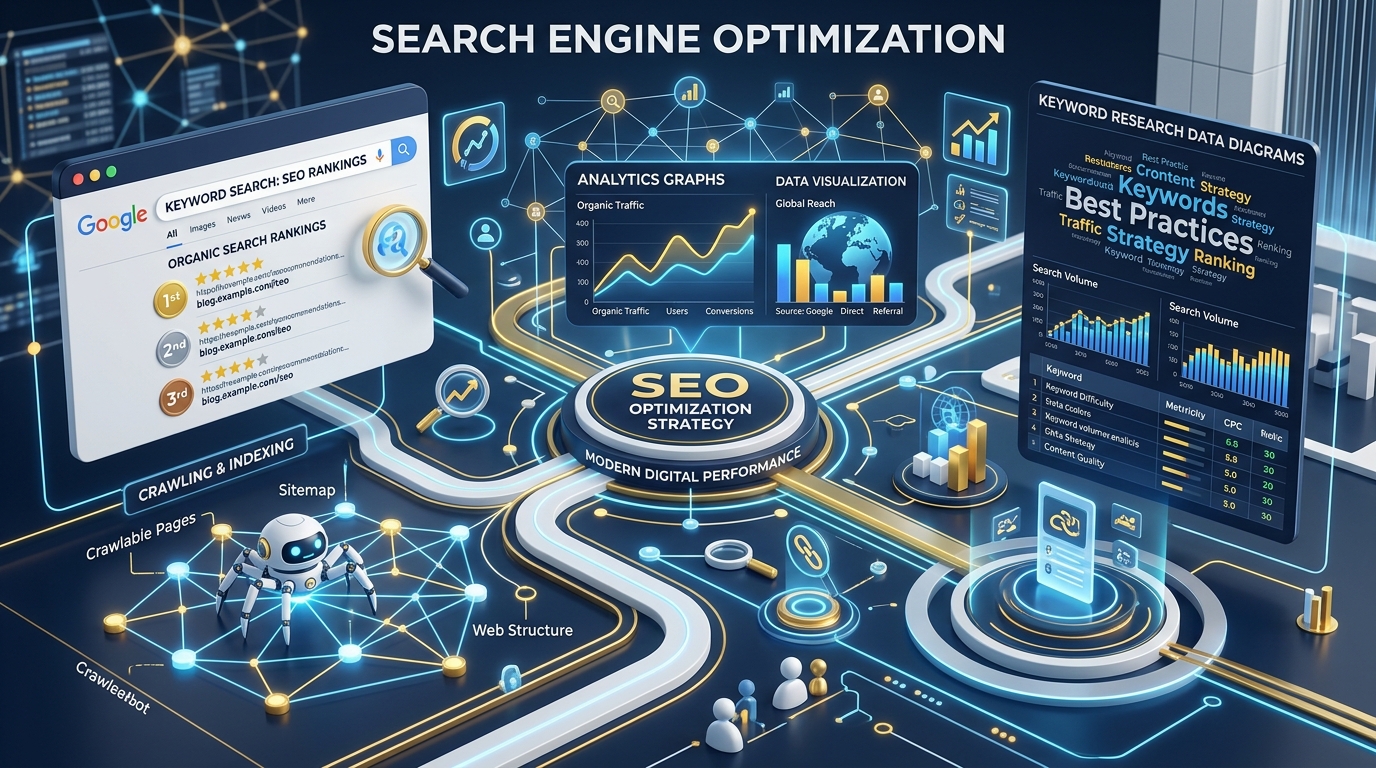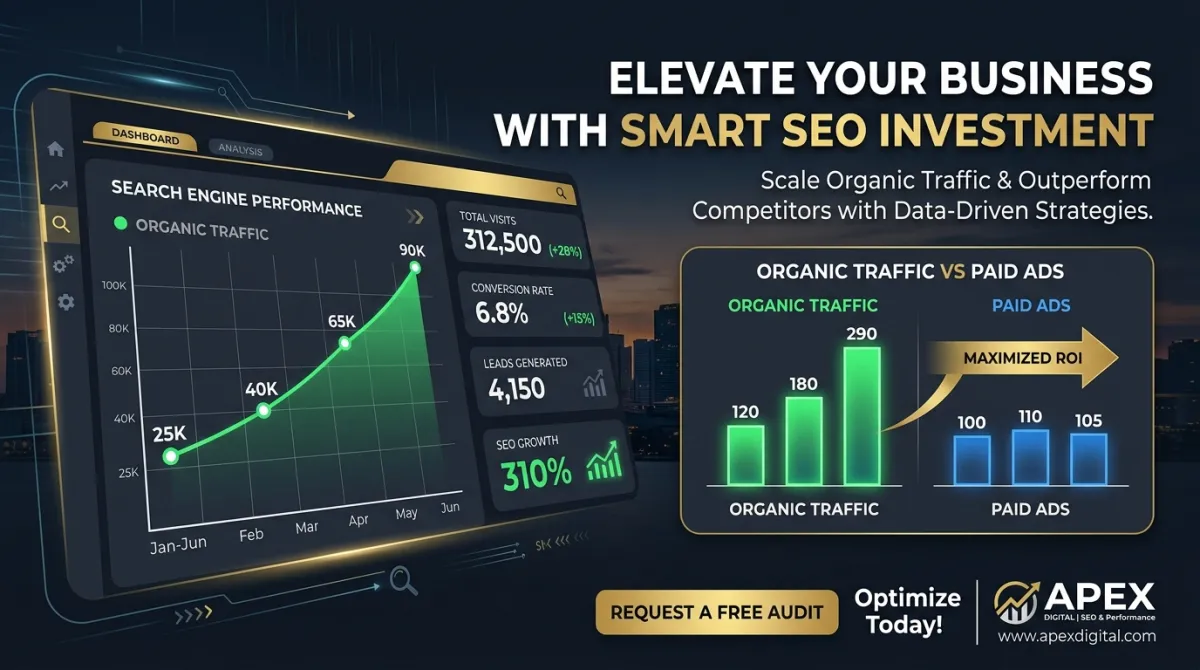
Evaluating whether Search Engine Optimization (SEO) is worth the investment requires assessing its ability to generate recurring organic visibility, qualified leads, and measurable financial returns over time. SEO functions as an infrastructure investment that positions commercial websites at the exact moment prospective buyers search for relevant products and services on Google, Bing, and Artificial Intelligence (AI) answer engines.
The main benefits of Search Engine Optimization (SEO) center on generating sustainable organic search traffic, lowering Customer Acquisition Cost (CAC), and establishing brand credibility. Leads generated through organic search close at an average rate of 14.6 percent, outperforming traditional outbound marketing close rates of 1.7 percent.
The primary uses and applications of Search Engine Optimization (SEO) include capturing existing search demand, expanding e-commerce store transactions, scaling B2B lead pipelines, and securing brand citations across Large Language Models (LLMs). Businesses deploy search strategies to capture consumers across every phase of the buyer journey.
The core components of Search Engine Optimization (SEO) comprise technical site architecture, keyword intent mapping, on-page optimization, content production, backlink acquisition, and user experience signals. Review our detailed SEO Guide to understand the fundamental architecture of search algorithms.
Table of Contents
- Is SEO Still Worth the Investment in 2026?
- How Effective Is SEO for Business Growth?
- 11 Proven Ways SEO Can Grow Your Business
- What Is the ROI of SEO?
- How Long Does It Take for SEO to Pay Off?
- Is SEO Worth the Money Compared With PPC?
- When Is SEO Worth It—and When Is It a Waste of Money?
- Are SEO Experts, Consultants, and Agencies Worth It?
- How Much Should a Business Invest in SEO?
- How to Know Whether Your SEO Investment Is Working
- How AI Is Changing the Value of SEO
- Final Verdict: Is SEO Worth the Investment?
- Frequently Asked Question
Is SEO Still Worth the Investment in 2026?
Yes, Search Engine Optimization (SEO) is still worth the investment in 2026 because organic search continues to generate 53.3 percent of all trackable digital website traffic worldwide. Over 70 percent of all consumer purchase journeys begin with an organic Google touchpoint. Search engines process over 8.5 billion queries per day, connecting ready buyers with relevant commercial solutions.
The real question executive teams must evaluate is whether visibility across modern discovery channels is worth the investment. Search behavior now spans classic Search Engine Results Pages (SERPs), AI Overviews, Google Maps, video search, and Large Language Models (LLMs) such as ChatGPT and Gemini. Companies that invest in search visibility secure market share, while companies that pause investment must pay escalating advertising rates to remain visible.
How Effective Is SEO for Business Growth?
Search Engine Optimization (SEO) generates an average Return on Investment (ROI) of 275 percent to 1,000 percent, making it one of the most effective long-term customer acquisition channels available to businesses. Organic search traffic drives 44.6 percent of total revenue across commercial industries, surpassing paid social media, display advertising, and outbound email campaigns.
SEO effectiveness stems from its role as an inbound demand capture mechanism. Traditional outbound marketing pushes promotional messages to passive prospects. Search Engine Optimization captures prospective buyers actively searching for solutions with clear commercial intent.
11 Proven Ways SEO Can Grow Your Business
There are 11 proven ways Search Engine Optimization (SEO) accelerates commercial growth and profitability:
1. Capture Existing Search Demand
SEO captures existing consumer demand at the exact moment prospective buyers express interest in specific products or services. Search engine users enter targeted keywords into search bars with precise commercial intent. Optimizing your website for high-intent search queries ensures your brand appears first when prospects actively seek purchase recommendations.
2. Generate Consistent Organic Traffic
SEO generates consistent, 24/7 website traffic without recurring advertising fees for individual clicks. Published content assets that achieve top organic rankings attract visitors continually over multiple years. This ongoing flow of visitors provides stable baseline revenue for your sales pipeline.
3. Attract High-Intent Customers
SEO attracts visitors with high commercial intent by targeting transactional and bottom-of-funnel keywords. Users searching for specific terms such as "commercial refrigeration installation London" or "enterprise payroll software pricing" possess immediate purchasing requirements. Search optimization directs these qualified prospects straight to conversion-optimized landing pages.
4. Generate More Qualified Leads
SEO produces qualified leads that close at an average rate of 14.6 percent, compared to 1.7 percent for outbound leads. Inbound organic search visitors proactively seek solutions and educate themselves using your authoritative content. This self-qualification process shortens sales cycles and increases lead-to-opportunity conversion rates.
5. Increase E-Commerce Sales
SEO increases e-commerce sales by ranking product, category, and comparison pages for transactional purchase queries. Over 43 percent of all global e-commerce traffic originates from organic Google searches. Optimizing product schema markup, faceted navigation, and internal link architecture drives direct checkout transactions.
6. Reduce Dependence on Paid Advertising
SEO reduces reliance on paid ad networks by creating an owned channel for customer acquisition. Paid media behaves like a financial meter that cuts off customer traffic the moment ad budgets run out. Establishing strong organic rankings allows organizations to reduce paid ad expenditures while maintaining steady conversion volumes.
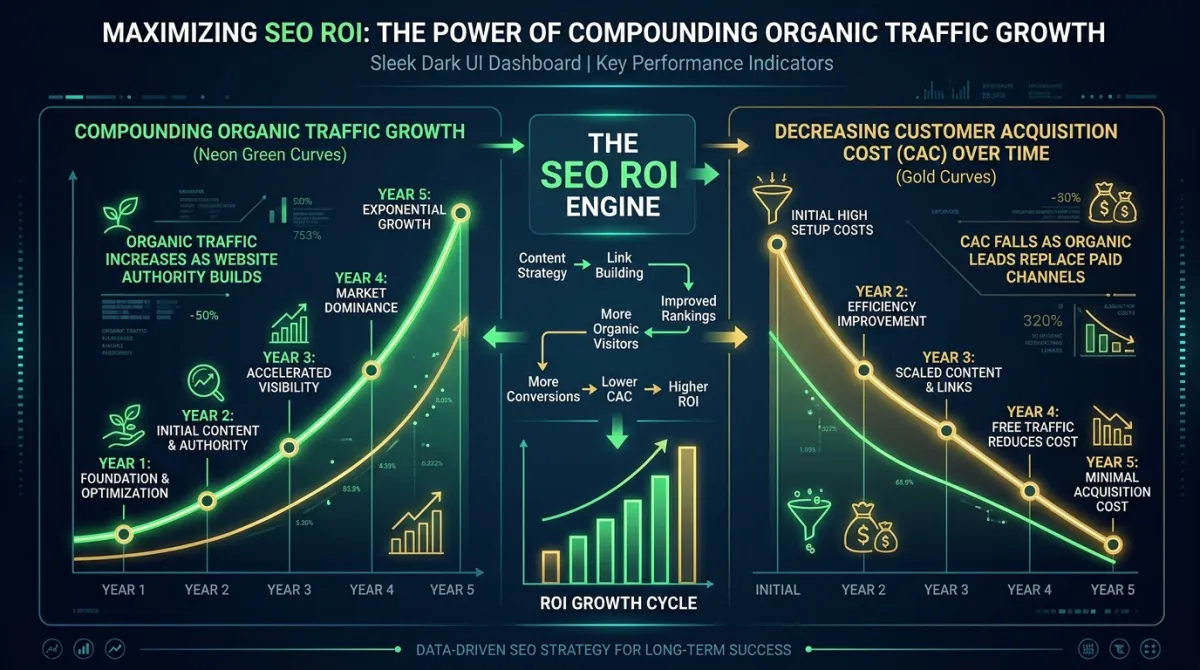
7. Lower Customer Acquisition Costs Over Time
SEO lowers Customer Acquisition Cost (CAC) because marginal costs per visitor decline as organic rankings mature. Paid advertising costs increase as keyword competition grows in Google Ads. Organic search assets compound over time, driving thousands of new leads without increasing your monthly marketing spend.
8. Build Long-Term Brand Visibility
SEO builds enduring brand visibility across search engine results pages, industry directories, and local map packs. Repeated exposure in search results establishes brand familiarity and consumer trust. Prospects who repeatedly see your company ranking at the top of Google associate your brand with market leadership.
9. Establish Topical Authority and Expertise
SEO establishes topical authority by publishing comprehensive content clusters that satisfy Google's Experience, Expertise, Authoritativeness, and Trustworthiness (E-E-A-T) guidelines. Demonstrating subject matter mastery across related subtopics signals algorithmic credibility to search engine crawlers and human evaluators.
10. Increase Visibility Across Modern Search
SEO increases discoverability across modern search interfaces, including Google AI Overviews, voice search, and LLM answer engines. AI engines rely on technically sound, structured web content with clear schema markup to generate answers. Ranking in traditional organic search directly fuels citations in AI-powered search engines.
11. Build a Compounding Marketing Asset
SEO builds permanent digital enterprise value by creating owned content and backlink assets that appreciate over time. Unlike rented ad placements, high-ranking web pages, optimized domain authority, and structured technical foundations remain corporate property, increasing overall business resale valuation.
What Is the ROI of SEO?
The average Return on Investment (ROI) of Search Engine Optimization (SEO) ranges from £2.75 to £10.00 ($3.50 to $12.50) for every £1.00 ($1.00) invested across a 12 to 24-month timeframe. Industry research across B2B, e-commerce, and professional service sectors indicates an average SEO ROI of 275 percent in year one and over 500 percent by year two as organic rankings compound.
How to Calculate SEO ROI
To calculate SEO ROI, use the standard commercial return formula:
SEO ROI (%) = [ (Revenue from Organic Search − Total SEO Costs) / Total SEO Costs ] × 100
For example, if a business invests £24,000 ($31,200) into an annual SEO campaign and generates £120,000 ($156,000) in attributable organic revenue, the net return is £96,000 ($124,800). Applying the formula yields an SEO ROI of 400 percent:
Consult our guide on How to measure SEO for step-by-step instructions on setting up conversion tracking in Google Analytics 4 (GA4) and Google Search Console (GSC).
What Costs Should You Include in SEO ROI?
There are 5 primary cost categories that businesses must include when calculating true SEO ROI:
- Agency Retainers or Consultant Fees: Monthly professional service fees paid to external SEO partners.
- In-House Staff Compensation: Pro-rated salaries and benefits for internal content writers, SEO specialists, and developers.
- Software and Tool Subscriptions: Software licenses for SEO tools such as Semrush, Ahrefs, Screaming Frog, and Sitebulb.
- Content Production and Design: Direct expenses for copywriting, graphic assets, video production, and technical editing.
- Web Development and Technical Fixes: Developer billable hours for site speed optimization, schema markup integration, and CMS updates.
How Long Does It Take for SEO to Pay Off?
SEO takes between 3 to 6 months (12 to 24 weeks) to generate initial ranking momentum and 6 to 12 months (24 to 52 weeks) to deliver substantial, compounding revenue returns. Search engines require time to discover updated pages, index new content, evaluate backlink authority, and measure user engagement signals.
The exact payback timeline depends on 4 primary factors:
- Domain Age and Authority: Established websites with existing backlink profiles rank faster than brand-new domains.
- Technical Site Health: Clean code, fast server response times, and valid Secure Sockets Layer (SSL) certificates speed up search indexing.
- Competitive Landscape: Niche industries with lower search competition achieve results in 3 to 4 months, whereas hyper-competitive markets require 6 to 12 months.
- Investment Velocity: Publishing high-quality content clusters and securing authoritative backlinks accelerates the payback period.
Is SEO Worth the Money Compared With PPC?
Yes, SEO is worth the money compared with Pay-Per-Click (PPC) advertising because SEO creates an owned marketing channel with compounding long-term value, whereas PPC represents rented traffic that stops immediately when budget ends. Over 70 to 80 percent of search engine users ignore sponsored ads and click directly on organic search listings.
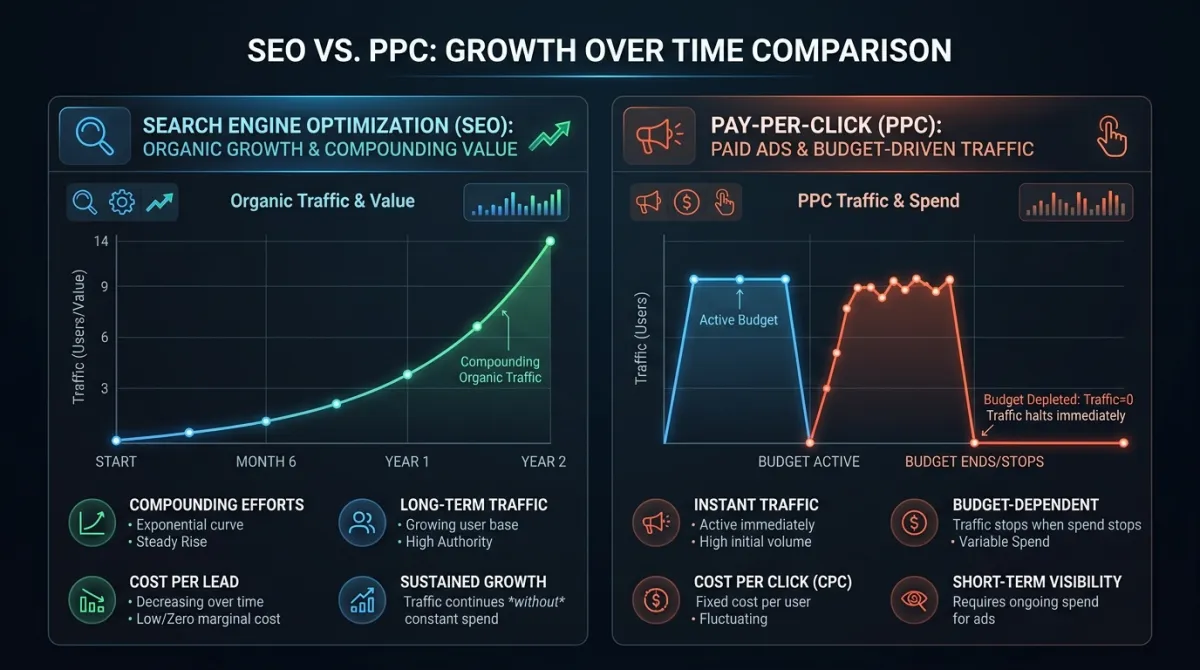
Here is a direct comparison between Search Engine Optimization (SEO) and Pay-Per-Click (PPC) advertising across key business metrics:
| Evaluation Metric | Search Engine Optimization (SEO) | Pay-Per-Click Advertising (PPC) |
|---|---|---|
| Time to Results | 3 to 6 months for initial traction; 6 to 12 months for scale | Immediate (within 24 to 48 hours of ad approval) |
| Cost Structure | Fixed monthly investment; zero cost per incremental click | Variable; you pay for every single click received |
| Long-Term Asset Value | High; builds compounding website authority and permanent equity | Zero; traffic disappears immediately when ad spend stops |
| User Trust & CTR | High; organic results capture 70% to 80% of total clicks | Moderate; sponsored ads capture 20% to 30% of clicks |
| Cost-Per-Lead Trajectory | Decreases consistently as organic traffic expands | Increases as ad platform bidding competition intensifies |
When Is SEO Worth It—and When Is It a Waste of Money?
SEO is worth the investment when your target audience actively searches for your services on Google, you have established conversion foundations, and your organization maintains a 6 to 12-month growth horizon. SEO becomes a waste of money if an organization lacks product-market fit, targets terms with zero search volume, or expects overnight transactional returns.
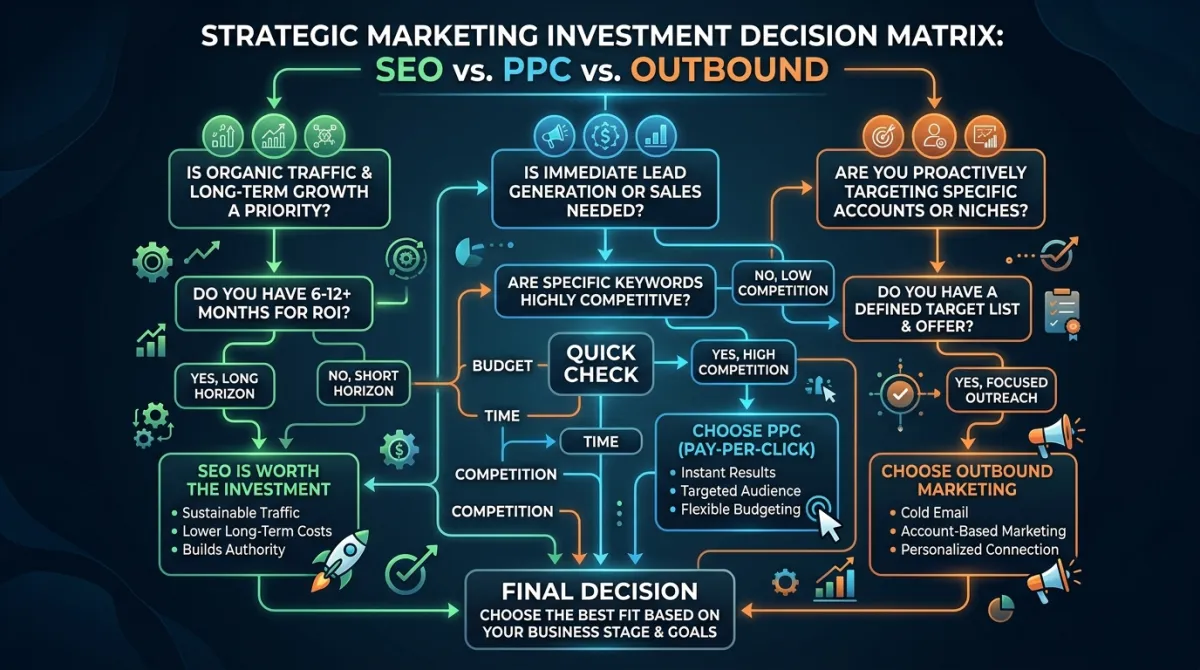
Review these criteria to determine whether your business type is positioned to profit from SEO:
- E-Commerce Retailers: High return profile. Thousands of high-intent transactional search queries exist for category and product pages.
- B2B and SaaS Companies: High return profile. Substantial Customer Lifetime Value (LTV) makes acquiring high-intent organic leads profitable.
- Local Service Providers: High return profile. High-intent local searches ("near me" queries) convert directly into phone inquiries and booked appointments.
- Multi-Location Enterprises: High return profile. Scaling location landing pages captures geographic search queries across multiple territories.
When Should You Choose PPC Instead?
Choose Pay-Per-Click (PPC) advertising instead of SEO under these 4 specific business conditions:
- Immediate Short-Term Deadlines: Run PPC campaigns if you need attendees for an event happening in 3 weeks or a 48-hour flash promotion.
- Testing Brand-New Offerings: Deploy paid ads if you need rapid market feedback on a new value proposition before investing in content production.
- Zero Existing Search Demand: Choose paid social ads and outbound PR if you have invented a novel product category that users do not yet search for by name.
- Emergency Cash Flow Requirements: Use PPC if your company requires immediate transactions this week to fund operational payroll.
Are SEO Experts, Consultants, and Agencies Worth It?
Yes, professional SEO experts, consultants, and agencies are worth the investment because specialized specialists possess the technical tooling, algorithmic experience, and outreach relationships required to outrank aggressive competitors. Hiring an experienced agency costs significantly less than building a full-time in-house department of technical developers, copywriters, data analysts, and link builders.
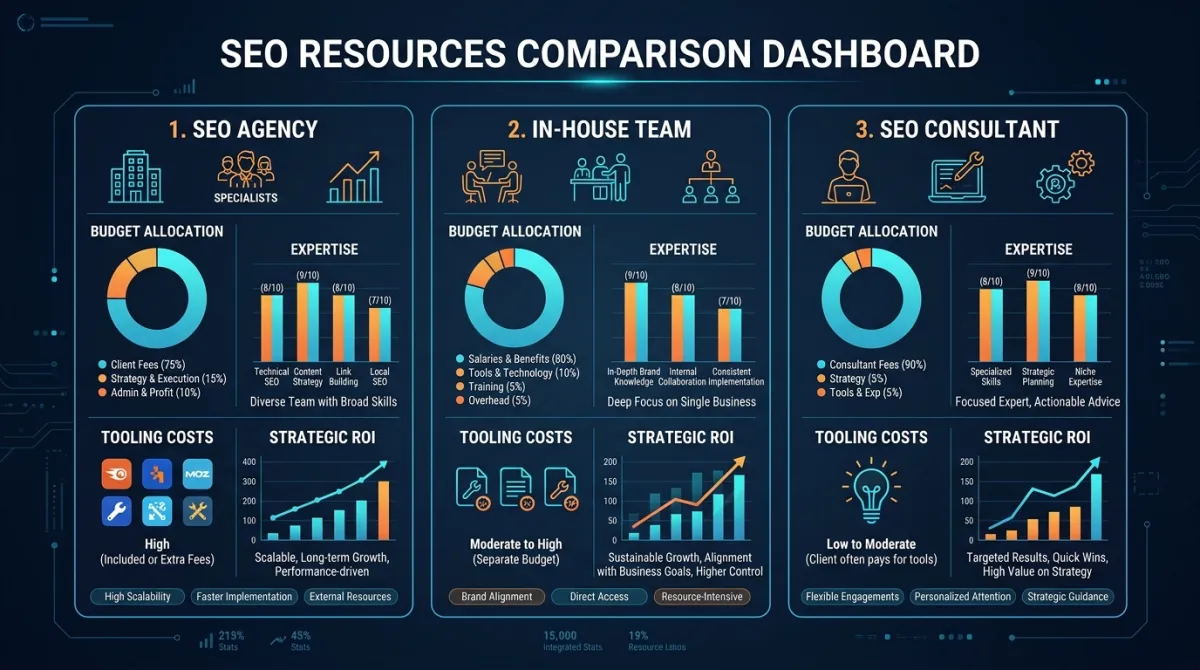
Compare your operational options for executing an SEO strategy:
- Professional SEO Agency: Provides a turnkey multidisciplinary team (technical SEO, content marketing, outreach PR, analytics). Recommended for scaling businesses seeking accelerated growth without management overhead.
- Independent SEO Consultant: Delivers high-level strategic audits and specialized advisory. Recommended for companies with strong internal developer and copywriting resources.
- In-House SEO Specialist: Offers dedicated attention to a single website. Incurs higher fixed overheads (£45,000 to £85,000 / $58,000 to $110,000 salary plus tooling subscriptions).
How Much Should a Business Invest in SEO?
A small to mid-sized business should invest between £1,500 and £5,000 ($2,000 to $6,500) per month for comprehensive SEO services, while competitive enterprise brands invest £5,000 to £15,000+ ($6,500 to $20,000+) monthly. As a general benchmark, established organizations allocate 5 percent to 12 percent of total gross revenue toward marketing, with search optimization representing 25 percent to 50 percent of digital marketing budgets.
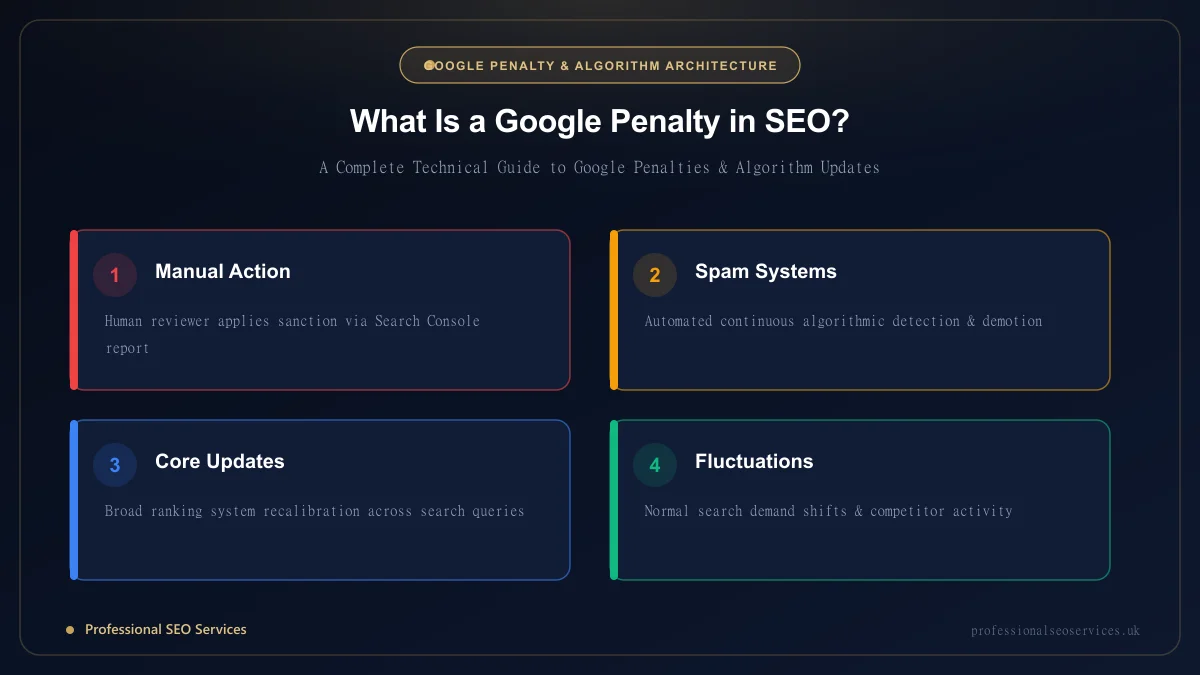
Avoid cheap "cheap SEO packages" offering £199 ($250) monthly services. Low-cost providers rely on automated spam, low-quality AI spinning, and toxic link networks that trigger algorithmic Google penalties. Review our comprehensive guide on what is google penalty in seo to understand how manual actions, automated spam filters, and core ranking drops occur.
How to Know Whether Your SEO Investment Is Working
Determine whether your SEO investment is working by tracking 6 core Key Performance Indicators (KPIs) across a 90-day reporting cadence:
- Organic Search Impressions: Monitored in Google Search Console (GSC). Rising impressions indicate expanding keyword visibility.
- Non-Branded Keyword Rankings: Tracked via rank tracking software. Improvements in commercial non-branded search terms demonstrate increasing domain authority.
- Organic Search Clicks and Sessions: Evaluated in GA4. Sustainable month-over-month growth in organic visitors confirms real traffic capture.
- Organic Goal Conversions: Form fills, phone calls, demo bookings, and transactions attributed to organic search in your CRM.
- Customer Acquisition Cost (CAC): Total SEO expenditure divided by the number of organic customers acquired. CAC should trend downward over time.
- Organic Revenue and SEO ROI: Total net revenue generated from organic traffic compared against total monthly search investment.
How AI Is Changing the Value of SEO
Artificial Intelligence (AI) increases the strategic value of SEO because Large Language Models (LLMs) and Google AI Overviews retrieve information directly from high-authority, well-optimized web pages. Generative search systems synthesize answers using top-ranking web pages as primary training citations.
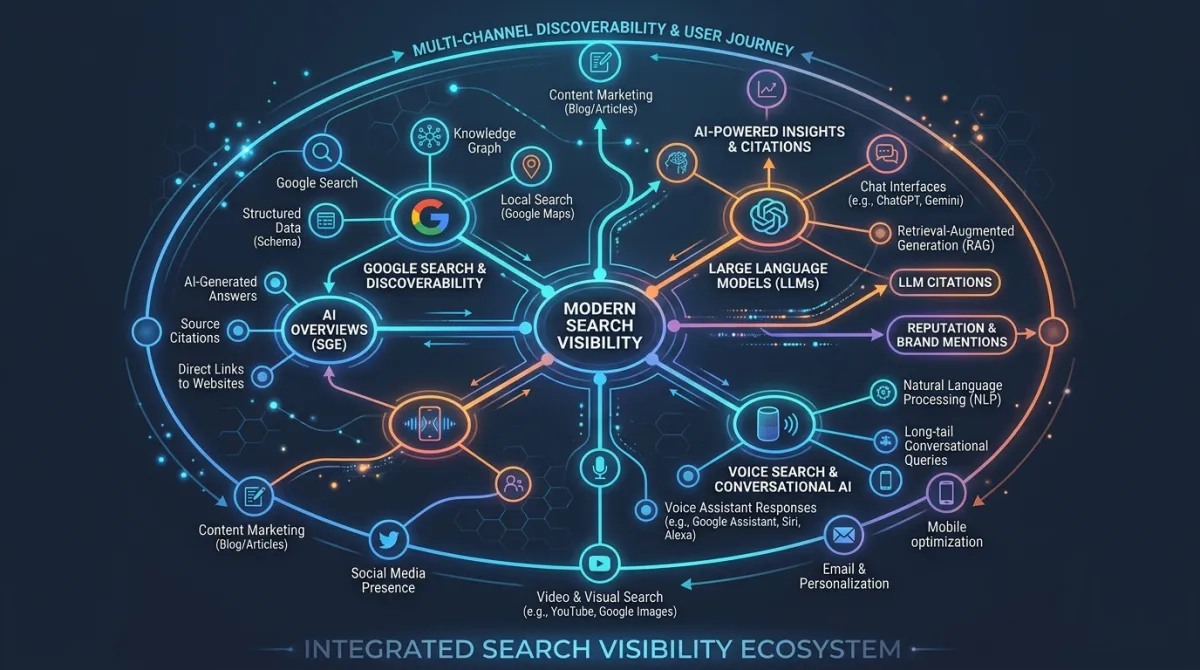
Appearing in AI search answers requires executing modern Generative Engine Optimization (GEO) principles:
- Demonstrate Verifiable E-E-A-T: Include detailed author credentials, company registrations, client case studies, and transparent editorial policies.
- Implement Structured Schema Markup: Deploy Article, Organization, Product, and FAQ schema to help AI engines interpret your entities accurately.
- Answer Queries Directly: Place concise, factual answers immediately below header tags to win AI Overview snippet citations.
- Build Broad Digital PR Citations: Secure brand mentions and backlinks from authoritative industry journals and media publications.
Final Verdict: Is SEO Worth the Investment?
Yes, Search Engine Optimization (SEO) is worth the investment for any commercial enterprise seeking profitable, long-term customer acquisition and compounding business equity. Organizations that build organic visibility capture existing search demand, lower customer acquisition costs, and outperform competitors who rely solely on temporary paid advertising.
The real question is whether being visible where your customers search is worth the investment. With 53.3 percent of all web traffic flowing through organic search and leads closing at 14.6 percent, search optimization represents the backbone of modern digital marketing strategy.
Frequently Asked Question
Yes, Search Engine Optimization (SEO) is a cost-effective marketing channel because organic rankings generate ongoing website traffic without incremental costs per click. Small businesses reduce customer acquisition costs over time by capturing existing search demand.
An SEO investment pays for itself within 6 to 12 months (24 to 52 weeks) for most commercial websites. Initial ranking improvements appear within 3 to 6 months (12 to 24 weeks), while revenue gains compound in subsequent quarters.
Yes, SEO is worth the money compared with Pay-Per-Click (PPC) advertising for sustainable growth. While PPC delivers immediate clicks during active ad spend, SEO builds permanent digital assets that deliver continuous organic leads after campaign completion.
No, Artificial Intelligence (AI) does not make SEO obsolete. Large Language Models (LLMs) and Google AI Overviews retrieve information directly from authoritative, well-structured, indexable web pages optimized through technical SEO and E-E-A-T signals.
A standard business should invest between £1,500 and £5,000 ($2,000 to $6,500) per month for professional SEO agency retainers. Specialized enterprise campaigns range from £5,000 to £15,000+ ($6,500 to $20,000+) monthly depending on industry competitiveness.